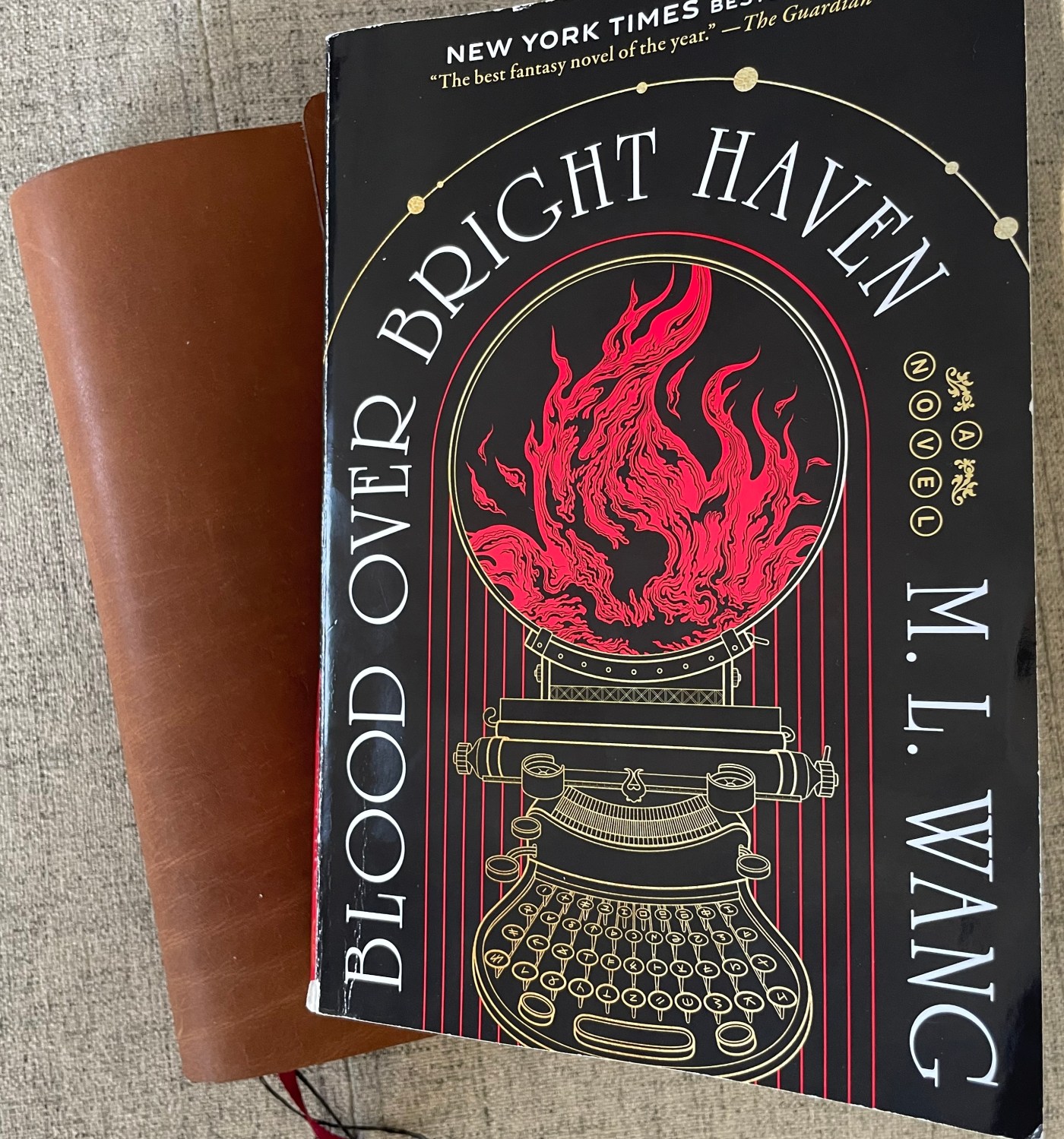
We’ve been snowed in for DAYS now, and as such, it was a great time to check off some of my yearly reading list. I (Holly) made a list of physical books that I own that I MUST READ before I buy any new books. (Does anyone else have this overconsumption problem with books like me?)
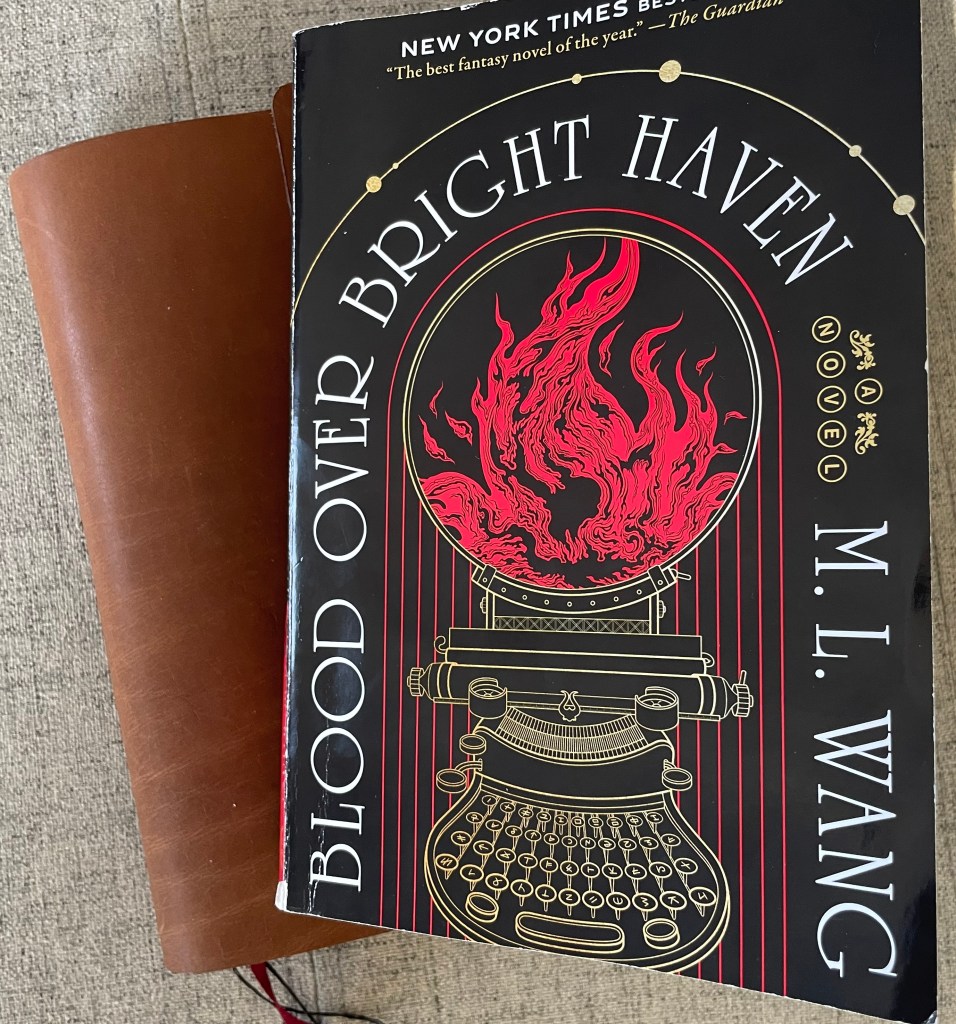
Throughout this snow break, I’ve been reading a book from that list, Blood Over Bright Haven by M. L. Wang. And let me tell you, it is a powerful fantasy book that I could see teachers using in the secondary classroom, either as a whole-group book study or as a literature circle choice. This book is about injustice and power and greed and corruption and colonialism and prejudice and dehumanization and perception/manipulation vs. reality. This book feels like a modern alternative to Brave New World, Things Fall Apart, or Fahrenheit 451 for students who prefer a more modern, uncomplicated writing style. I definitely think this would hit the spot for students who are interested in social injustice. So many prompts about this book could relate to freedom and power, fear, revenge/forgiveness, or possessions, all themes in my own Savvas curriculum. As I was reading, I decided it would be a great book for the second Inspired blog post for teachers.
One passage that interested me was a discussion between the two main characters about competition versus collaboration. Education, to me, has this particular struggle. Those who work in and around the educational system value collaboration within classes, but education systems also pit individual learning in a competitive environment, encouraging the best to rise to the top for both real and imagined rewards (e.g., scholarships, awards, praise, pride, etc.), sometimes at the expense of the intrinsic reward of learning in itself.
In this scene in Blood Over Bright Haven, Thomil, who is from a Kwen culture that embraces a partially utilitarian and partially collectivist philosophy, questions the competitive nature of Tiran and, ultimately, Sciona, the main character, who is the first female highmage in Tiran’s history. Her own perspective falls in line with Tiran’s competitive philosophy: she thinks that she is better, that she is smarter, that she is a harder worker than both her contemporaries and her predecessors—after all, that’s why she’s the first female highmage. Despite the prejudices she has faced, she still doesn’t understand the way Tiran uses the Kwen to keep their city running and keep the whole Kwen culture down. Her constructed reality about Tiran’s goodness slowly dismantles as the book progresses. In fact, the whole book situates Tiran as the opposite of the Kwen, which includes a horrific truth that Sciona and Thomil discover.
The whole scene I might use in a classroom full of books is on pages 124-126, starting with “‘Together, Renthorn and a Halaros-supported Tanrel could draw up a formidable sourcing plan…” (p. 124) and going through the second full paragraph on p. 126 that ends with “or at least harness all their energy for his own purposes” (p. 126). Frankly, that’s too much to put here and to assess with students who haven’t read the book. Therefore, here is the section of the close read I would use to discuss competition vs. collaboration in a discussion, quickwrite, or journal:
“I mean—this barrier expansion is important to Tiran’s well-being,” Thomil said. “You’ve made that clear many times. Why would you want them to do poorly? For that matter, why not pool your skill with theirs, if the end goal is to help your people?”

“I’m sorry?” Sciona said, floored that he would even ask that…

“I’m not any more selfish than my colleagues,” she said…

“Forgive me, ma’am. It’s the spellwork that is important to you, yes? That it be done correctly and that it have a positive effect on people’s lives—comparable to the spell work of your male peers?”

“Yes.” Obviously.

“If this is the goal, then does it truly matter whose name goes on the work?”

“Of course it matters!” Sciona rounded on Thomil again…
In this scene, we get two conflicting views of the world for students to contemplate. Most have probably been in collaborative groups where others did the work (or they did), but all the names went on it. This form of collaboration is something they are probably familiar with, and they are also very familiar with Sciona’s notion of credit and the individuality of certain work. The following prompts, whether given in discussion or through a quickwrite or journal, could let them think deeply about the nature of competition and collaboration and, hopefully, tie them to their own experiences:
- Argumentative Reflective Prompt: Here, Thomil and Sciona have different views of the world. Thomil focuses on collaboration for good, and Sciona focuses on how individuality and competition can improve society. Who do you think is right? Do more problems get solved when people work together to accomplish goals for the betterment of their communities, or do more problems get solved when individuals compete to solve problems in the world that can help their communities? Give evidence about why you think the way you do, and explain your evidence.
- Multimodal Reflections: Here, Thomil and Sciona argue about collaboration versus competition. Create a sketchnote that represents concrete examples of each argument. You may use a combination of text and images to illustrate your thinking. Discuss with your partner your sketchnote, and explain why you chose the text and images that you did.
- Making Connections and Drawing Conclusions: Annotate the following text, drawing conclusions about what big ideas this conversation represents. In other words, what big ideas are they discussing? What big ideas do each represent in this excerpt? Then, make connections to other TV shows, books, movies, songs, etc. that you think also relate to this excerpt. Finally, write a short quickwrite explaining why one of the connections you made relates to this conversation between Sciona and Thomil.
There are, of course, a number of potential prompts that could be used for this scene, but these are the ones that sprang to my mind after reading it. I would probably do this as a discussion or quickwrite that would lead to a journal.
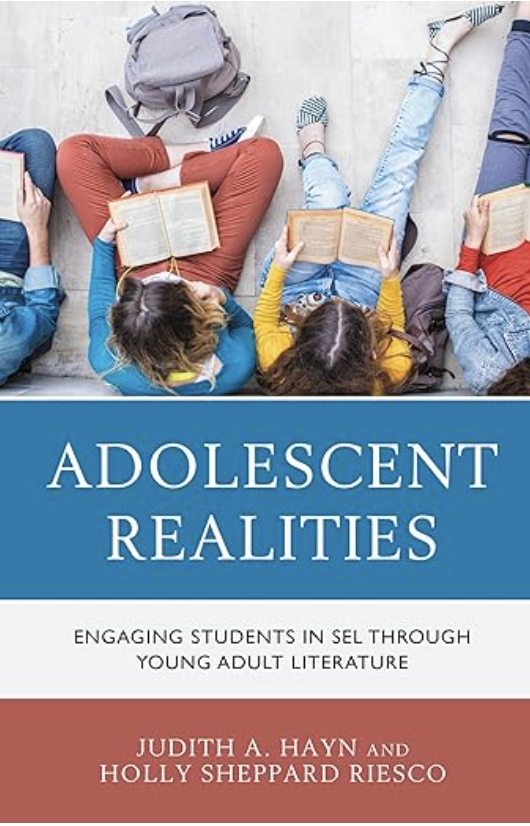
What are some prompts that you might generate? If you’ve read this book, what are some close reads that you would pull for students to consider deeply? Although I noted many more close reads as I read through this book—I do that often and create questions for potential use (see my book Adolescent Realities: Engaging Students in SEL through Young Adult Literature for an example of what I do for books that are great for lit circles or whole group book discussions)—this particular excerpt was one I would use to ask students to consider collaboration and competition to guide them to making connections between this text and their lives in school.
As always, feel free to share your ideas about this book or passage with us on Instagram at @joyful_literacies. In the meantime, stay inspired, my fellow writers, readers, and teachers!
 Joyful Literacies
Leave a comment