
by Holly Sheppard Riesco
I recently received a note from a student that he wanted to thank me for how intentional I had been in my teaching since he realized how it helped build him and other students toward the next English credit course.
What a note to receive! (Even if I knew that the coaches made the players of the team write at least one thank-you note to a teacher who has made an impact. This kid still chose me!)
I often think about intentionality and joy. I teach AP and advanced classes to tenth graders, where the majority of my students’ trajectories are college-bound pathways. How do I balance my beliefs about joy with the thinking that these kids will need in their future college courses? But whenever I ask this question, I answer it this way: I need to stop the binary. It’s both all the time: joy exists in thinking deeply about things. What I notice at the beginning of the year, though, is that students don’t look at school through the joyful lens. They just want to complete the task to earn the allotted points.
So, how do I combat what I consider to be student apathy toward critical thinking? (Also, is this not problematic? By the time students reach tenth grade, many already view school as merely a checkmark system designed to propel them forward. How can I convince them that learning can propel them forward, while also demonstrating its value for its own sake? How can we encourage them to view school more intrinsically, rather than through the instrumental valuation that has been instilled in them by the time they reach tenth grade? These are the questions that bother me the most.)
As such, every year I realize I need a boost or even a change to my practice. This is my 22nd year in education, and I’ve taught almost every grade from secondary ELA to undergraduate courses. While I would say I have a firm grasp of who I am as a pedagogue (Hello, Joyful Literacies in Secondary English Language Arts!), I always strive to remain vigilant in my choices—from activities to strategies to in-depth discussions—for my classroom to thrive as students evolve throughout the years, with sometimes new and always varying needs.
There are, honestly, go-to strategies and activities I employ in instruction to create a routine that is familiar to my students. But I do want to change it up if I can. (This is one of the reasons some days my room will be in a different configuration, with students asking in long-suffering voices, “Where do I sit now?”)
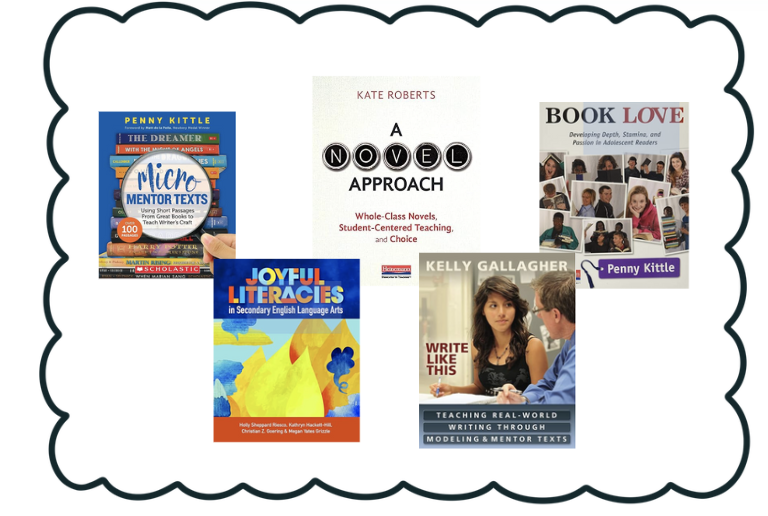
But when I feel I’ve done too much of my go-to strategies and activities, I have books that I also “go to” that invigorate my practice and get me thinking beyond my normal routine. So, I’ve compiled this list for you, my dear teachers, in hopes that these will inspire you as well.
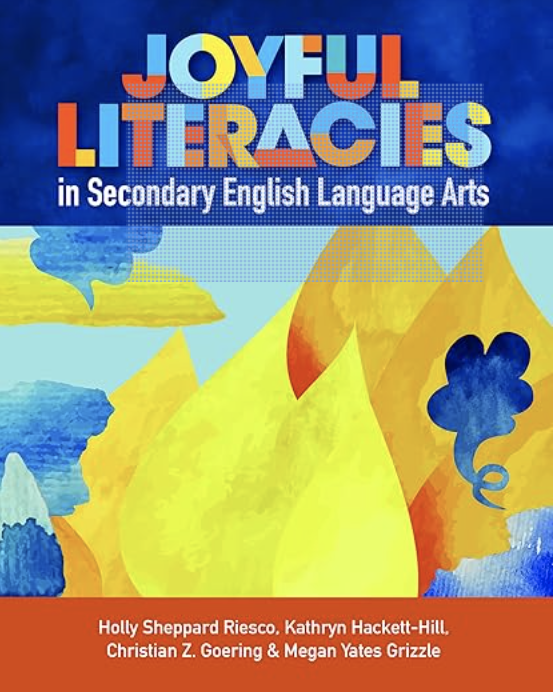
- Joyful Literacies in Secondary English Language Arts by, well, me and Katie and Chris and Meg. I know, I know. I’m one of the authors of the book, but this book was written by three additional teachers who inspire me daily. I look to the chapters in this book to see where I can apply or adapt something that we included in the pages, a practice I recently wrote about in an article in English Journal. (See the article “Italian Brain Rot and Skibidi Toilets: Students’ Joyful Literacies in an ELA Space” in the most recent edition of English Journal.)
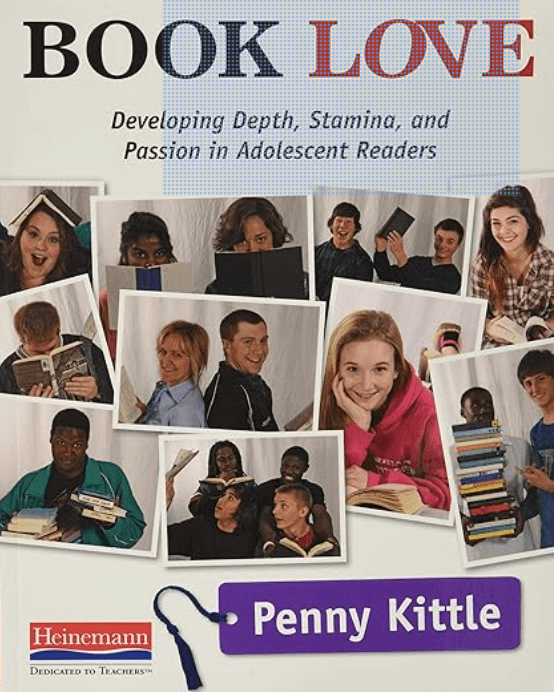
- Book Love by Penny Kittle. I love reading, but I’m increasingly finding that students don’t. (In fact, I have a whole stack of recent bell ringers to prove this to be true.) I turn to Kittle’s book for inspiration on how to help kids find books that interest them and encourage them to discuss ideas with one another and with me.
- Write Like This: Teaching Real-World Writing Through Modeling and Mentor Texts by Kelly Gallagher. This is probably on many English teachers’ “inspiration” lists, but I always return to this one again and again for writing inspiration. This is a seminal text for me, and I love Gallagher’s insights about writing.
- Micro Mentor Texts by Penny Kittle. I love this book for how it breaks down reading to get to the thinking and the writing we need students to do in the secondary ELA classroom. It is our purpose, after all, to prepare our students for their literacy lives beyond school, and this book has helped me break down my own reading that leads to writing.
- A Novel Approach by Kate Roberts. This book has numerous activities that can either go along with whole-group novels or be adapted for shorter texts. There are so many, in fact, that I have yet to try or adapt them all, which is why I return to this book every year. Maybe this year will be the year I hit them all!
These are the books and the teachers who inspire me when I want to move beyond my routines! Who are the teachers and their books that inspire you?
 Joyful Literacies